.jpg "post-slide")
.jpg "post-slide")
.jpg "post-slide")
.jpg "post-slide")


Why feeling like a fraud might actually mean you're on the right track.
If you’ve ever sat at your desk, stared at your pitch deck, or walked into an investor meeting thinking, “Who let me in here?” — you’re not alone.
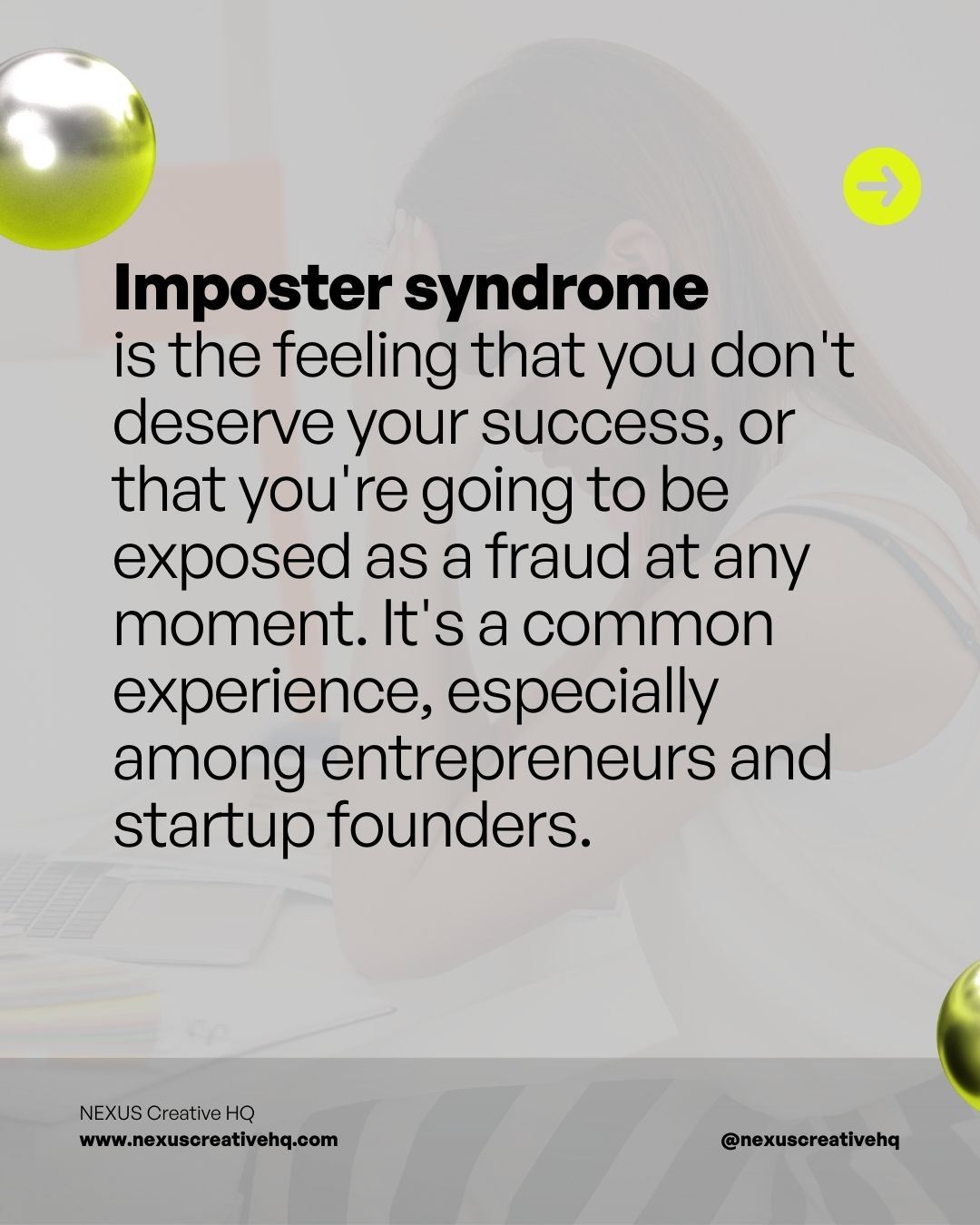
Imposter syndrome is one of the most common psychological experiences among entrepreneurs, especially early-stage and first-time founders. Yet despite the shame it often carries, imposter syndrome can actually be a superpower when understood and managed well.
At NEXUS, we work closely with founders across creative, digital, and tech industries — and imposter syndrome comes up more often than fundraising, product-market fit, or hiring challenges. This article explores why it happens, how it shows up, and how founders can turn their self-doubt into fuel for growth.
Why Is Imposter Syndrome So Common Among Founders?
Launching a startup demands constant learning, bold decisions, and high-risk moves — the perfect breeding ground for self-doubt. Founders face:
1️⃣ Pressure to succeed
From investors to customers to competitors, everyone seems to be watching. That pressure can make every decision feel make-or-break.
2️⃣ Constant comparison
Startup culture is filled with highlight reels — funding announcements, successful exits, and rapid-growth stories. It’s easy to feel behind.
3️⃣ Being surrounded by talented people
When advisors, mentors, and other founders appear confident, polished, and experienced, founders often feel like the only ones fumbling through the chaos.
4️⃣ Learning on the go
Every founder is doing something for the first time — managing a team, raising capital, validating products, building systems. Feeling “behind the curve” is normal.
The truth? Most founders you admire have felt this way — and still do.
How Imposter Syndrome Shows Up in Founders
Imposter syndrome doesn’t always look like insecurity. Sometimes it hides behind behaviours that appear “productive” on the surface.
😰 Fear of Failure
You hold back on launching, pitching, or sharing because the risk of getting it wrong feels too big.
🤔 Self-Doubt
You question your decisions, abilities, and worth — even when the evidence shows you’re doing well.
🔍 Perfectionism
You strive for the perfect product, perfect timing, or perfect answer — which often delays progress.
⏳ Procrastination
You avoid actions that might expose you, especially high-visibility tasks like fundraising or presenting.
These behaviours aren't signs of incompetence; they're signs that you care deeply about doing your work well.
A Reminder from Michelle Obama
“Imposter syndrome is a reminder that you're growing and learning. It's a sign that you're taking risks and pushing yourself outside of your comfort zone.”
This mindset shift alone can transform how founders interpret discomfort. Self-doubt doesn’t mean you’re failing — it means you're evolving.
How Founders Can Overcome Imposter Syndrome
You can’t eliminate imposter syndrome entirely — but you can learn to work with it.
1️⃣ Recognise that it’s normal
Every founder, leader, and innovator experiences this at some point. You’re not broken — you’re human.
2️⃣ Talk about it
Share it with a mentor, therapist, peer, or fellow founder. Speaking it out loud removes its power and creates room for support.
3️⃣ Focus on your strengths
Create a list of your skills, achievements, and unique value. Revisit it when self-doubt creeps in.
4️⃣ Celebrate your wins
Even the small ones. Startups are built on micro-victories, not just major milestones.
5️⃣ Don’t be afraid to ask for help
Founders often feel they must do everything alone — but your community, mentors, and network exist for a reason.
The Real Truth About Imposter Syndrome
Imposter syndrome isn’t a sign that you’re unqualified — it’s a sign that you’re stepping into growth.
It's often the emotional side effect of doing something bold, innovative, and meaningful.
At NEXUS, we see founders transform when they stop fighting imposter syndrome and start understanding it.
And if you’re feeling it right now, let this be your reminder:
You belong here.
You’re building something that matters.
You are not alone.