.jpg "post-slide")
.jpg "post-slide")
.jpg "post-slide")
.jpg "post-slide")
.jpg "post-slide")
.jpg "post-slide")
.jpg "post-slide")
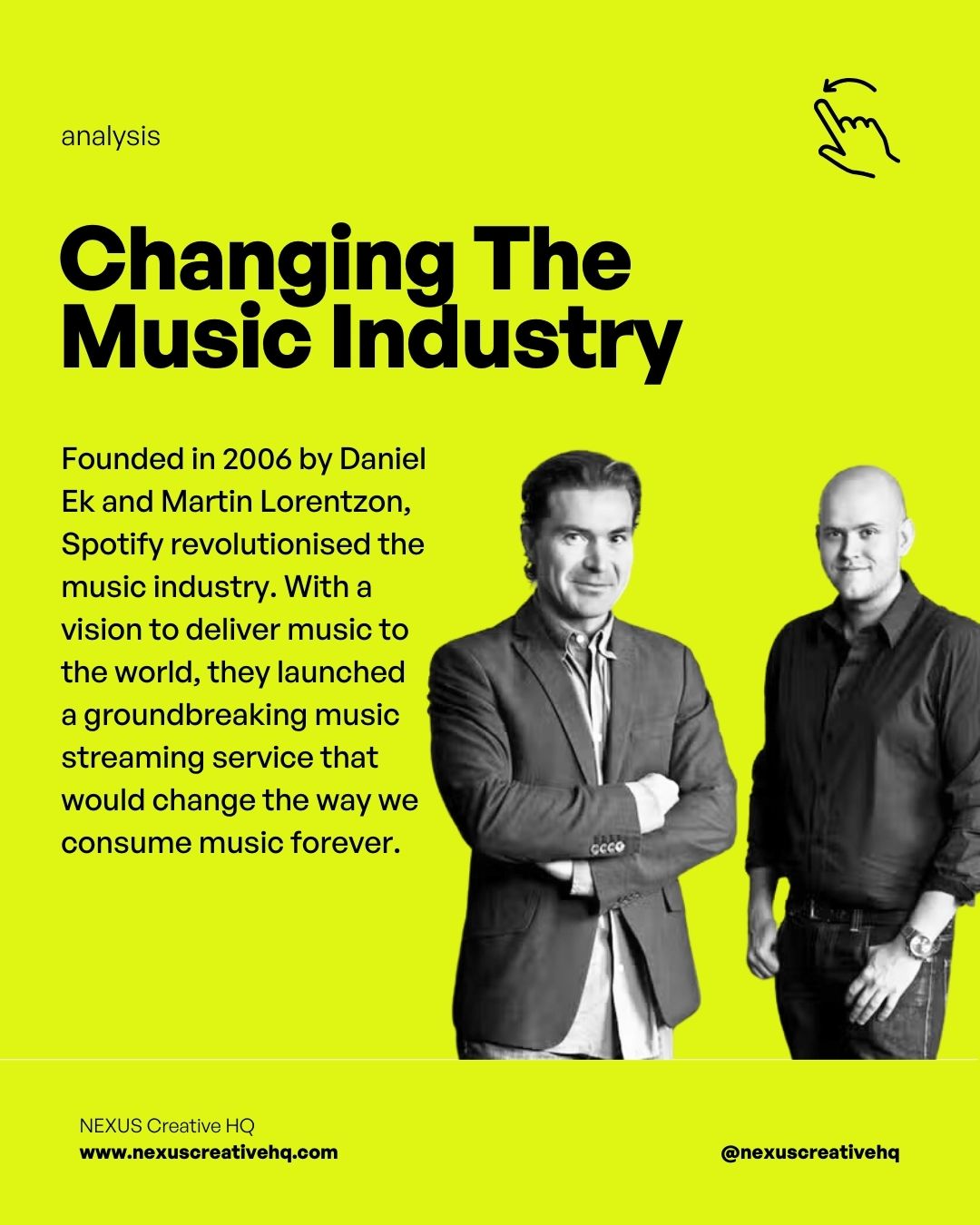


From humble beginnings in Stockholm to becoming one of the world’s most influential audio platforms, Spotify is a masterclass in startup growth, innovation, and adaptation. Founded in 2006 by Daniel Ek and Martin Lorentzon, Spotify didn’t just create a music streaming service—it redefined how we experience music altogether.
In this blog post, we break down Spotify’s journey and extract five powerful growth strategies that any startup can learn from and apply.
1. The Freemium Model: Build First, Monetize Later
When Spotify entered the market, illegal music downloads were rampant. The music industry was desperate for a solution—and Spotify delivered. Their bold move? Offer the service for free.
Spotify’s freemium model allowed users to listen to music with ads, while offering an upgrade path to an ad-free, premium experience. This gave them:
-
Rapid user acquisition: People love free access.
-
A funnel for conversion: Users got hooked and many upgraded.
-
A competitive edge: Other platforms charged upfront or required downloads.
Lesson for startups: Consider how you can reduce friction for your users at the start. Offer value first. Monetize once trust and demand are built.
2. Data-Driven Personalization: Know Your Users
Spotify isn’t just a music player—it's an intelligent system that learns from user behavior. By analyzing listening habits, skips, saves, and more, Spotify offers personalized playlists like Discover Weekly and Wrapped, making the experience feel tailor-made.
This use of data creates a deep emotional connection and increases user retention.
Lesson for startups: Data is your superpower. Use it to understand your users better than anyone else. Personalization can dramatically boost engagement and loyalty.
3. Diversify Your Offerings: Think Beyond the Core
Initially a music platform, Spotify evolved into a comprehensive audio hub. Podcasts, audiobooks, and exclusive content brought in new audiences and additional revenue streams.
Their bold acquisitions (like Anchor and Gimlet Media) and exclusive deals (such as with Joe Rogan) solidified their place beyond music.
Lesson for startups: Once you have a solid core product, expand strategically. Explore adjacent markets, formats, or platforms to grow your user base and increase value.
4. Strategic Partnerships: Grow Faster Together
Spotify’s survival and growth hinged on partnerships with major record labels. These alliances granted access to a rich music library and established industry credibility. Without these partnerships, Spotify wouldn’t have had the content needed to compete.
They also partnered with Facebook, gaming platforms, and smart devices—amplifying their reach.
Lesson for startups: You don’t have to do everything alone. Strategic collaborations can unlock new audiences, reduce costs, and build authority faster.
5. User Experience is King
While many early platforms struggled with clunky designs, Spotify invested heavily in creating a clean, intuitive, and seamless interface. Whether on desktop, mobile, or web, the experience remains consistent and user-centric.
From easy playlist creation to flawless recommendations, Spotify made discovery and consumption effortless.
Lesson for startups: Never compromise on user experience. A beautiful, frictionless interface can be the difference between retention and churn.
Final Thoughts: What Startups Can Learn from Spotify
Spotify’s journey is not just about music—it’s about understanding users, being agile, and playing the long game. Here are the takeaways worth tattooing on your entrepreneurial brain:
-
Embrace the freemium model to attract users.
-
Leverage data for personalisation and retention.
-
Diversify strategically to grow and remain relevant.
-
Form strong partnerships for scale and legitimacy.
-
Prioritize user experience in every iteration.
Spotify’s story proves that with the right mix of innovation, strategy, and user obsession, even a startup can reshape an entire industry.